Transforming manufacturing for the world’s most complex, asset-heavy industries
Vultonai is an AI-native tech company transforming how industrial enterprises operate and scale across the value chain.
By combining physical AI with real-world processes, it creates self-optimizing factories that enable faster decisions, sharper execution, and continuous improvement.
The challenges holding manufacturing back
Fragmented operations
Legacy infrastructure
No factory-wide intelligence
Reactive manufacturing
Rising performance pressure
Solutions built for a new industrial era
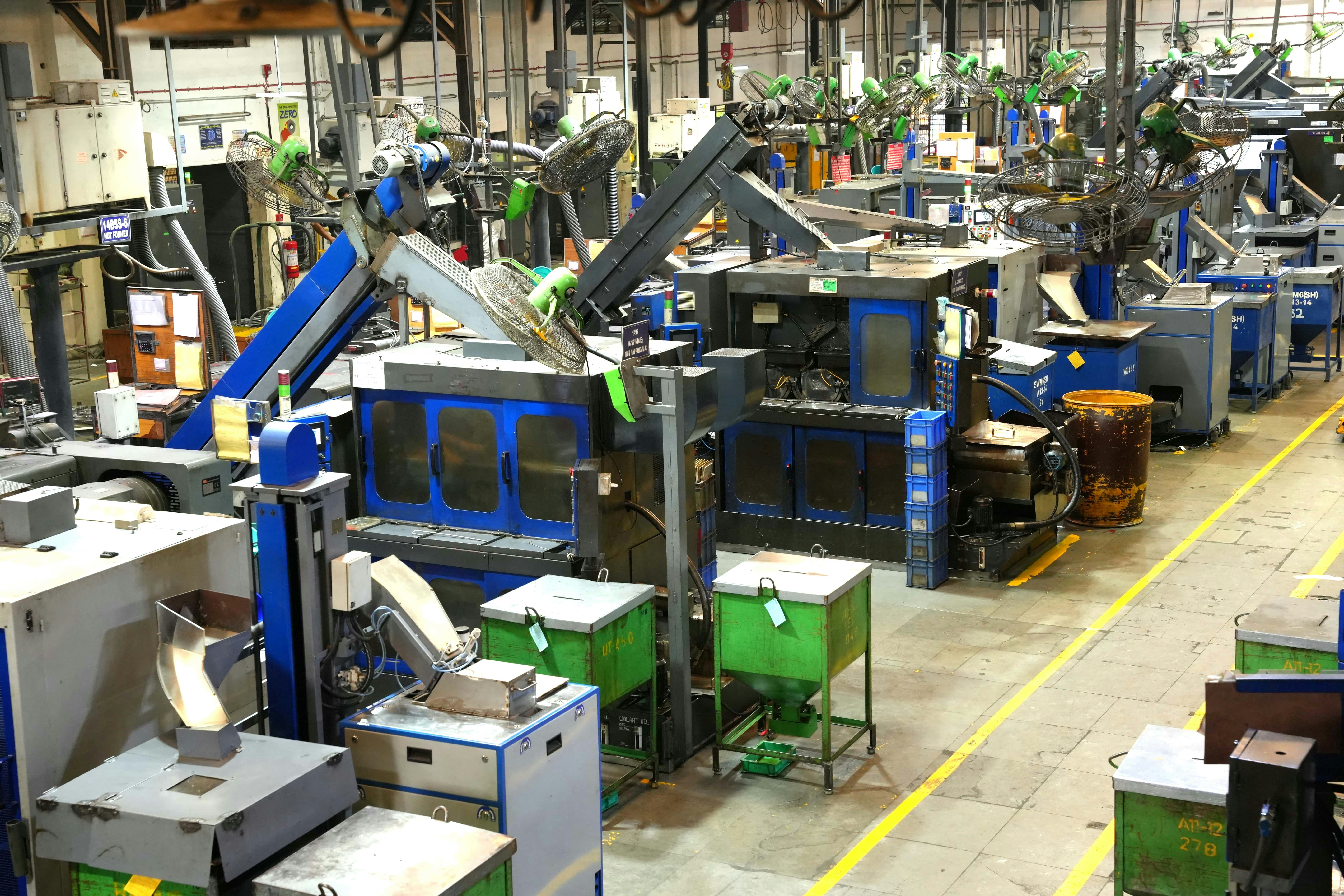
Connected operations layer
Unify data across design, procurement, and production into a single, real-time system of record.
Connected operations layer
Unify data across design, procurement, and production into a single, real-time system of record.
AI-ready infrastructure
Modernize legacy systems to support scalable, high-performance AI across the factory stack.
AI-ready infrastructure
Modernize legacy systems to support scalable, high-performance AI across the factory stack.
Factory intelligence platform
Gain end-to-end visibility across machines, lines, and plants—turning blind spots into live insights.
Factory intelligence platform
Gain end-to-end visibility across machines, lines, and plants—turning blind spots into live insights.
Predictive maintenance
Anticipate failures before they occur and eliminate unplanned downtime.
Predictive maintenance
Anticipate failures before they occur and eliminate unplanned downtime.
Adaptive production planning and scheduling
Dynamic plans that adjust in real time to demand, disruptions, and constraints
Adaptive production planning and scheduling
Dynamic plans that adjust in real time to demand, disruptions, and constraints
Autonomous vendor management
Continuously optimize supplier performance, cost, and risk.
Autonomous vendor management
Continuously optimize supplier performance, cost, and risk.
Supply chain optimization
Synchronize demand, inventory, and logistics to reduce cost and improve responsiveness.
Supply chain optimization
Synchronize demand, inventory, and logistics to reduce cost and improve responsiveness.
Quality control and defect detection
Identify defects instantly and improve yield with AI-powered inspection.
Quality control and defect detection
Identify defects instantly and improve yield with AI-powered inspection.
Digital twin and simulation
Test scenarios before execution—optimize without real-world disruption.
Digital twin and simulation
Test scenarios before execution—optimize without real-world disruption.
Autonomous robotics
Deploy intelligent systems that adapt to changing production environments.
Autonomous robotics
Deploy intelligent systems that adapt to changing production environments.
Worker safety and compliance
Ensure safer, compliant operations through real-time monitoring and alerts.
Worker safety and compliance
Ensure safer, compliant operations through real-time monitoring and alerts.
Generative AI for engineering
Accelerate design, prototyping, and optimization with AI-driven workflows.
Generative AI for engineering
Accelerate design, prototyping, and optimization with AI-driven workflows.
Our Team

Dhruv Sehrraa
Co-founder
Dhruv Sehrraa is a builder at heart, operating a dynamic Venture Builder that actively incubates and scales high-impact innovations at the intersection of Technology, Artificial Intelligence and Real Estate. By combining operational expertise with deep market insights, he accelerates transformative ventures that are reshaping the world. His approach moves beyond passive allocation, focusing instead on hands-on value creation to build the next generation of industry-defining companies.
Complementing his venture building, Dhruv runs a Multi-Family Office DE Growth Capitals that acts as a strategic capital vehicle across developed and emerging markets. His investment thesis spans Tech, Consumer, Real Estate, and Emerging Markets, deploying capital across the US, the Middle East, and Asia.
This dual engine of venture building and direct investment allows him to bridge the gap between early-stage innovation and institutional-grade scale, positioning him as a key player in cross-border capital flows.
Dhruv Sehrraa founded 256 Network in 2018, an exclusive global innovation ecosystem and invite-only community of capital allocators managing over $3.9 trillion USD. Operating under the Chatham House Rule, 256 Network fosters confidential dialogue among CEOs, family office leaders, and influential business figures to shape the future of finance, innovation, and philanthropy.

Ezhilan Aribaskar
Co-founder
Ezhilan Aribaskar (Eli) is an operator at heart and an investor driving sustainable growth across artificial intelligence, advanced technology, and real estate. He currently serves as Co-Founder and Partner at DE Growth Capitals Pte. Ltd., a private investment firm dedicated to accelerating high-growth innovations and deploying capital into transformative enterprises. Additionally, Ezhilan is a Partner at 256 Network, an exclusive global community actively redefining how capital flows and influence shape the 21st century.
He is the Founder and CEO of Elevate Ecosystem Private Ltd., a strategic Go-To-Market (GTM) partner that helps Tech and AI brands build deep inroads and scale rapidly across the US, APJ, and India. He also co-founded VultonAI, which pioneers "physical AI" to fundamentally transform traditional industries, and is the co-founder of Emerging Heights, an ultra-exclusive global real estate firm developing bespoke assets for the global capital allocator community.
Prior to his current ventures, Ezhilan spent over a decade as Vice President of Sales and Business Operations at YourStory Media, where he collaborated closely with leading founders, investors, and corporate ecosystems globally. His deep entrepreneurial roots trace back to Redwood City, California, where he was a founding team member of Smart Voicemail Inc. (GoToPal), an AI-based telecommunications service that secured major licensing deals in the US before its successful acquisition.
Dhruv Sehrraa is a builder at heart, operating a dynamic Venture Builder that actively incubates and scales high-impact innovations at the intersection of Technology, Artificial Intelligence and Real Estate. By combining operational expertise with deep market insights, he accelerates transformative ventures that are reshaping the world. His approach moves beyond passive allocation, focusing instead on hands-on value creation to build the next generation of industry-defining companies.
Complementing his venture building, Dhruv runs a Multi-Family Office DE Growth Capitals that acts as a strategic capital vehicle across developed and emerging markets. His investment thesis spans Tech, Consumer, Real Estate, and Emerging Markets, deploying capital across the US, the Middle East, and Asia.
This dual engine of venture building and direct investment allows him to bridge the gap between early-stage innovation and institutional-grade scale, positioning him as a key player in cross-border capital flows.
Dhruv Sehrraa founded 256 Network in 2018, an exclusive global innovation ecosystem and invite-only community of capital allocators managing over $3.9 trillion USD. Operating under the Chatham House Rule, 256 Network fosters confidential dialogue among CEOs, family office leaders, and influential business figures to shape the future of finance, innovation, and philanthropy.
Dhruv Sehrraa
Co-founder
Dhruv Sehrraa is a builder at heart, operating a dynamic Venture Builder that actively incubates and scales high-impact innovations at the intersection of Technology, Artificial Intelligence and Real Estate. By combining operational expertise with deep market insights, he accelerates transformative ventures that are reshaping the world. His approach moves beyond passive allocation, focusing instead on hands-on value creation to build the next generation of industry-defining companies.
Complementing his venture building, Dhruv runs a Multi-Family Office DE Growth Capitals that acts as a strategic capital vehicle across developed and emerging markets. His investment thesis spans Tech, Consumer, Real Estate, and Emerging Markets, deploying capital across the US, the Middle East, and Asia.
This dual engine of venture building and direct investment allows him to bridge the gap between early-stage innovation and institutional-grade scale, positioning him as a key player in cross-border capital flows.
Dhruv Sehrraa founded 256 Network in 2018, an exclusive global innovation ecosystem and invite-only community of capital allocators managing over $3.9 trillion USD. Operating under the Chatham House Rule, 256 Network fosters confidential dialogue among CEOs, family office leaders, and influential business figures to shape the future of finance, innovation, and philanthropy.
Ezhilan Aribaskar
Co-founder
Ezhilan Aribaskar (Eli) is an operator at heart and an investor driving sustainable growth across artificial intelligence, advanced technology, and real estate. He currently serves as Co-Founder and Partner at DE Growth Capitals Pte. Ltd., a private investment firm dedicated to accelerating high-growth innovations and deploying capital into transformative enterprises. Additionally, Ezhilan is a Partner at 256 Network, an exclusive global community actively redefining how capital flows and influence shape the 21st century.
He is the Founder and CEO of Elevate Ecosystem Private Ltd., a strategic Go-To-Market (GTM) partner that helps Tech and AI brands build deep inroads and scale rapidly across the US, APJ, and India. He also co-founded VultonAI, which pioneers "physical AI" to fundamentally transform traditional industries, and is the co-founder of Emerging Heights, an ultra-exclusive global real estate firm developing bespoke assets for the global capital allocator community.
Prior to his current ventures, Ezhilan spent over a decade as Vice President of Sales and Business Operations at YourStory Media, where he collaborated closely with leading founders, investors, and corporate ecosystems globally. His deep entrepreneurial roots trace back to Redwood City, California, where he was a founding team member of Smart Voicemail Inc. (GoToPal), an AI-based telecommunications service that secured major licensing deals in the US before its successful acquisition.
Dhruv Sehrraa is a builder at heart, operating a dynamic Venture Builder that actively incubates and scales high-impact innovations at the intersection of Technology, Artificial Intelligence and Real Estate. By combining operational expertise with deep market insights, he accelerates transformative ventures that are reshaping the world. His approach moves beyond passive allocation, focusing instead on hands-on value creation to build the next generation of industry-defining companies.
Complementing his venture building, Dhruv runs a Multi-Family Office DE Growth Capitals that acts as a strategic capital vehicle across developed and emerging markets. His investment thesis spans Tech, Consumer, Real Estate, and Emerging Markets, deploying capital across the US, the Middle East, and Asia.
This dual engine of venture building and direct investment allows him to bridge the gap between early-stage innovation and institutional-grade scale, positioning him as a key player in cross-border capital flows.
Dhruv Sehrraa founded 256 Network in 2018, an exclusive global innovation ecosystem and invite-only community of capital allocators managing over $3.9 trillion USD. Operating under the Chatham House Rule, 256 Network fosters confidential dialogue among CEOs, family office leaders, and influential business figures to shape the future of finance, innovation, and philanthropy.
What's New
Dhruv Sehrraa is a builder at heart, operating a dynamic Venture Builder that actively incubates and scales high-impact innovations at the intersection of Technology, Artificial Intelligence and Real Estate. By combining operational expertise with deep market insights, he accelerates transformative ventures that are reshaping the world. His approach moves beyond passive allocation, focusing instead on hands-on value creation to build the next generation of industry-defining companies.
Complementing his venture building, Dhruv runs a Multi-Family Office DE Growth Capitals that acts as a strategic capital vehicle across developed and emerging markets. His investment thesis spans Tech, Consumer, Real Estate, and Emerging Markets, deploying capital across the US, the Middle East, and Asia.
This dual engine of venture building and direct investment allows him to bridge the gap between early-stage innovation and institutional-grade scale, positioning him as a key player in cross-border capital flows.
Dhruv Sehrraa founded 256 Network in 2018, an exclusive global innovation ecosystem and invite-only community of capital allocators managing over $3.9 trillion USD. Operating under the Chatham House Rule, 256 Network fosters confidential dialogue among CEOs, family office leaders, and influential business figures to shape the future of finance, innovation, and philanthropy.

The Factory Is Becoming a System, Not a Site

Prediction Is Table Stakes. Autonomy Is the Prize

Supply Chains Are Evolving from Pipelines to Organisms
Dhruv Sehrraa is a builder at heart, operating a dynamic Venture Builder that actively incubates and scales high-impact innovations at the intersection of Technology, Artificial Intelligence and Real Estate. By combining operational expertise with deep market insights, he accelerates transformative ventures that are reshaping the world. His approach moves beyond passive allocation, focusing instead on hands-on value creation to build the next generation of industry-defining companies.
Complementing his venture building, Dhruv runs a Multi-Family Office DE Growth Capitals that acts as a strategic capital vehicle across developed and emerging markets. His investment thesis spans Tech, Consumer, Real Estate, and Emerging Markets, deploying capital across the US, the Middle East, and Asia.
This dual engine of venture building and direct investment allows him to bridge the gap between early-stage innovation and institutional-grade scale, positioning him as a key player in cross-border capital flows.
Dhruv Sehrraa founded 256 Network in 2018, an exclusive global innovation ecosystem and invite-only community of capital allocators managing over $3.9 trillion USD. Operating under the Chatham House Rule, 256 Network fosters confidential dialogue among CEOs, family office leaders, and influential business figures to shape the future of finance, innovation, and philanthropy.
Build the next generation of manufacturing
Connect with us to explore how Vultonai can transform your operations with AI—from the factory floor to the entire value chain.
Start a Conversation
